

Revegetation projects are essential for restoring degraded landscapes, stabilising soils, rebuilding biodiversity, and improving ecosystem resilience. Across Australia, these projects are widely used in bushland regeneration, mine-site rehabilitation, farmland shelterbelts, and urban environmental programs. However, planting trees or shrubs is only the first step. Without protection during the early growth phase, many seedlings struggle to survive harsh environmental conditions and animal browsing.
This is where tree guards play a critical role. By protecting young plants during their most vulnerable stage, tree guards significantly improve survival rates in revegetation projects. From reducing environmental stress to preventing animal damage, the right tree guard helps seedlings establish strong roots and grow into healthy trees.
Below, we explore how tree guards improve revegetation success and how different guard solutions can be used in restoration projects.
The Challenge of Seedling Survival in Revegetation Projects
Young plants planted in restoration sites face numerous threats. Unlike established vegetation, seedlings have limited root systems and fragile stems, making them vulnerable to environmental pressures.
Common challenges include:
-
Grazing by animals such as rabbits, kangaroos, deer, and livestock
-
Wind exposure and temperature fluctuations
-
Moisture loss from soil and leaves
-
Spray drift from nearby weed control programs
-
Damage from debris, foot traffic, or equipment
Without protection, these pressures can dramatically reduce survival rates. Tree guards provide a protective barrier that allows seedlings to grow in a more stable environment during the crucial early stages of development.
Creating a Protective Microclimate
One of the most important benefits of tree guards is their ability to create a favourable microclimate around young plants.
Tree guards reduce wind exposure, stabilise temperature fluctuations, and help retain moisture near the seedling. These factors help plants conserve energy while developing stronger roots and stems. Tree guards can also reduce moisture loss and environmental stress, which improves establishment success.
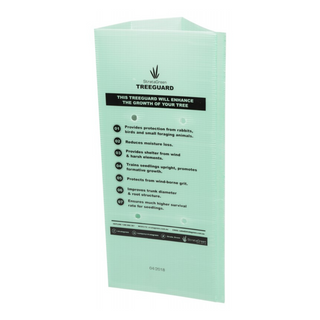
One solution is Fluted Plastic Treeguards, which provide a sheltered environment that protects seedlings from wind-borne grit and harsh weather conditions while helping plants grow upright and develop stronger trunk structure.

This protective environment allows plants to focus on growth rather than survival, significantly increasing the chances that a seedling will establish successfully.
Protection from Browsing Animals
Animal browsing is one of the biggest threats to revegetation programs. In many parts of Australia, species such as kangaroos, rabbits, sheep, and cattle can quickly destroy newly planted seedlings.
Tree guards provide a physical barrier that prevents animals from accessing young stems and foliage.
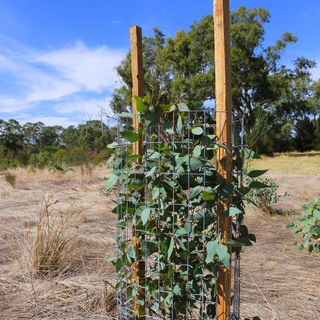
Heavy-duty solutions such as the Thorny Devil Spiked Cattle/Sheep Tree Guard are designed specifically for environments where livestock or wildlife may be present. These guards are made from strong welded wire mesh and protect individual plantings from animals including cattle, sheep, deer, kangaroos, and rabbits.

This type of protection is particularly important for:
-
Farm shelterbelt plantings
-
Habitat restoration areas
-
Mine-site rehabilitation projects
-
Large-scale environmental plantings
By preventing browsing damage, tree guards dramatically increase the likelihood that planted trees will survive and mature.
Improving Early Growth and Plant Structure
Tree guards also play an important role in shaping plant growth.
When a young plant grows inside a guard, the structure encourages upward growth while protecting delicate stems from bending or breakage. This helps seedlings develop strong trunk diameter and root systems during the establishment phase.
In addition to providing structural support, guards can also protect seedlings from physical impacts such as:
-
Equipment movement
-
Foot traffic in restoration areas
-
Storm debris and wind-driven materials
These protective conditions allow plants to grow faster and develop stronger structural integrity.
Cost Efficiency in Large-Scale Revegetation Projects
Large-scale revegetation programs often involve planting hundreds or thousands of seedlings. Without protective measures, high plant mortality can dramatically increase project costs due to replanting and maintenance.
Tree guards reduce these costs by improving survival rates and reducing the need for replacement planting.
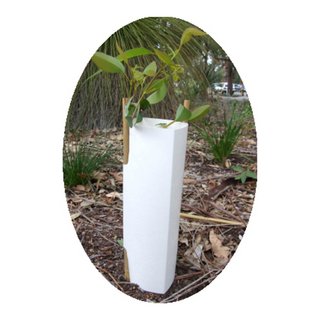
Carton Treeguards provide an affordable and practical option for large-scale revegetation projects. These guards offer shelter for tube stock during the first year of growth and are designed to gradually break down into the soil as they degrade.

Because they are easy to install and cost-effective, they are widely used in projects where large numbers of seedlings need protection.
This makes tree guards an important tool for:
-
Government revegetation programs
-
Environmental restoration projects
-
Community planting initiatives
-
Agricultural windbreak plantings
Supporting Sustainable Restoration Practices
Environmental restoration projects often aim to minimise long-term environmental impact. For this reason, many projects are shifting toward biodegradable or recyclable tree guards.
Sustainable guard solutions help protect seedlings while avoiding the long-term waste associated with traditional plastic guards.
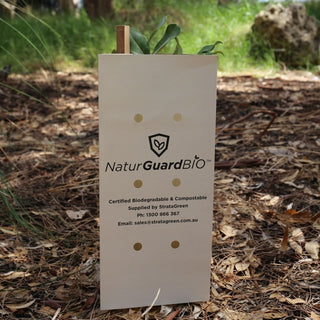
The NaturGuard BIO Treeguards, which are made from fully biodegradable materials and designed to break down naturally over time. These guards protect seedlings during the first year of growth while eventually decomposing into natural components such as water, carbon dioxide, and biomass.
Similarly, GREENGUARD tree guards are designed using recyclable and biodegradable materials to reduce environmental impact while providing long-lasting plant protection.

These options allow restoration programs to protect young plants without leaving long-term waste in natural landscapes.
Flexible Protection for Different Revegetation Environments
Different restoration sites require different levels of protection. The ideal tree guard depends on factors such as environmental conditions, wildlife pressure, and project scale.
Some common applications include:
1. Bush Regeneration and Habitat Restoration
Projects focused on restoring native vegetation often require guards that protect seedlings from wildlife and environmental stress. Durable options like mesh or rigid guards are commonly used.
2. Agricultural Shelterbelts
Farmers often plant trees to reduce wind erosion and provide livestock shelter. Guards prevent livestock damage while allowing trees to establish successfully.
3. Mine-Site Rehabilitation
Rehabilitation projects often operate in exposed conditions where young plants face wind, heat, and wildlife pressure. Strong reusable guards can help protect expensive plantings while vegetation establishes.
4. Urban and Community Plantings
In public areas, guards protect young trees from accidental damage, landscaping equipment, and foot traffic.
Because revegetation environments vary widely, having access to a range of tree guard designs allows project managers to choose the most suitable option for their site conditions.
Easy Installation and Maintenance
Another reason tree guards are widely used in restoration programs is their ease of installation.
Many guards are designed to be installed quickly using simple stakes or bamboo canes. For example, cardboard carton guards only require two bamboo canes to secure them in place, allowing rapid installation across large planting sites.
Similarly, pop-out style guards can be assembled on site and installed around seedlings in seconds. This helps revegetation teams efficiently protect large numbers of plants during planting programs.
Quick installation means:
-
Lower labour costs
-
Faster planting schedules
-
Easier maintenance and inspection
This efficiency is especially valuable for volunteer-driven or community-based revegetation projects.
The Long-Term Impact of Tree Guards
While tree guards are typically used during the early stages of plant growth, their impact extends far beyond the first year.
By helping seedlings survive the most vulnerable stage of development, tree guards contribute to the long-term success of restoration projects.
Higher survival rates lead to:
-
Faster canopy establishment
-
Improved biodiversity outcomes
-
Reduced replanting costs
-
Stronger long-term ecosystems
In large revegetation programs, even a small improvement in survival rates can result in thousands of additional trees successfully establishing across a landscape.
Supporting Successful Revegetation Projects
Revegetation projects require careful planning, suitable plant selection, and ongoing maintenance. Tree guards are one of the simplest and most effective tools available to improve planting success.
By protecting seedlings from animals, environmental stress, and physical damage, tree guards create the conditions young plants need to establish and thrive. With the right protection in place, restoration programs can achieve higher survival rates, healthier ecosystems, and more resilient landscapes.
Whether used in bush regeneration, agricultural plantings, or large environmental restoration projects, tree guards remain a fundamental part of successful revegetation strategies.
Need Help Choosing the Right Tree Guards?
Selecting the right protection for your revegetation project can make a significant difference in plant survival and long-term success. From biodegradable options to heavy-duty guards designed for livestock and wildlife environments, choosing the right solution ensures your seedlings have the best chance to establish and grow.
If you're planning a planting or restoration project and need guidance on suitable tree guards or plant protection solutions, the StrataGreen team can help.
Contact StrataGreen today to discuss your project requirements or explore their range of revegetation products designed to support successful planting outcomes.