

Latin name: Coccus hesperidum
Brown scale is a common sap-sucking insect found throughout Australia, attacking a wide range of ornamental plants, citrus, indoor plants and shrubs. The insects attach themselves to stems, branches and the undersides of leaves, where they feed on plant sap. Infestations are most common during warm weather and can quickly build up on stressed or sheltered plants.
As brown scale feeds, it produces large amounts of sticky honeydew that encourages the growth of black sooty mould. Ants are also commonly attracted to infestations, protecting the scale insects from natural predators.
Lifecycle
Brown scale undergoes incomplete metamorphosis.
- Adult females lay eggs beneath their protective shell.
- Eggs hatch into mobile crawlers that disperse across the plant.
- Crawlers settle on leaves and stems, forming a protective waxy covering.
- Adults remain attached while feeding and reproducing.
Multiple generations can occur each year in warm conditions.
Identification
- Adults measure 3–5 mm long.
- Flat, oval-shaped body with a smooth brown shell.
- Commonly found on stems, branches and leaf undersides.
- Young crawlers are tiny, pale and highly mobile.
- Honeydew and black sooty mould are often the first visible signs of infestation.
Damage
- Yellowing and premature leaf drop.
- Reduced plant vigour and stunted growth.
- Sticky honeydew on leaves and surrounding surfaces.
- Black sooty mould developing on honeydew.
- Increased ant activity around infested plants.
- Heavy infestations may cause branch dieback.
SOLUTIONS
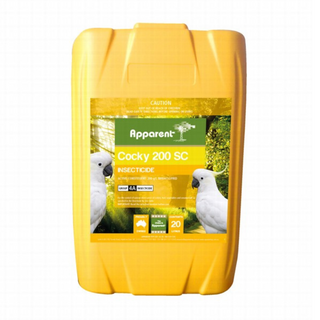
On citrus, ornamentals and shrubs with active scale: Apply Apparent Cocky to provide systemic control of feeding brown scale.
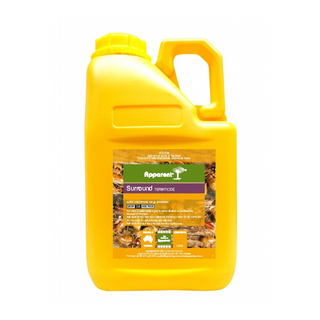
At the first signs of honeydew or sooty mould: Apply Apparent Surround to control exposed crawler stages before populations establish.
On heavily infested trees and shrubs: Prune heavily affected branches and combine Apparent Cocky with Apparent Surround as part of an integrated control program.
Where ants are protecting scale insects: Control ant activity and inspect plants regularly to improve the effectiveness of scale treatments.
- Systemic: Apparent Cocky
- Slow release: Initiator Tablets
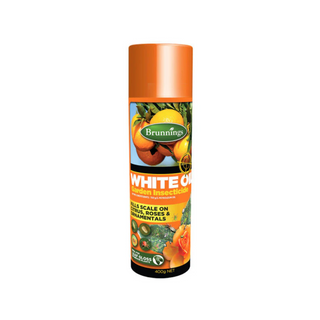
- Contact: White Oil Spray
References
https://www.agric.wa.gov.au/pest-insects/scale-insects
https://extension.umd.edu/resource/soft-scales-trees-and-shrubs